


Musicians we lost in 2018 so far
- Apr 27, 2018
- 6 min read
Back in the 1980s, there was that motion picture (and the TV indicate it depended on) called Fame. The film's signature melody, additionally called "Acclaim," was composed from the viewpoint of a youthful, sprouting entertainer like those portrayed on-screen, broadcasting that she was "going to live until the end of time." Now, no one was proposing that popularity would truly make anybody interminable and never again subject to the one relentless govern of being human (that passing will come one day). Or maybe, "Acclaim" (and its artist, Irene Cara) figuratively and precisely called attention to that aesthetic accomplishment does really, as it were, enable a man to live for eternity.
Those gifted people who make aesthetic commitments to the world, the sort of individuals who share their stunning capacities with whatever is left of us, never beyond words their work perseveres through time, pleasing and rousing others for a considerable length of time. Here are a few people for whom the signature tune from Fame heartbreakingly applies. These artists of different types shed their mortal curl in 2018, yet their arrangements, exhibitions, and works of brightness will most likely outlast every one of us.
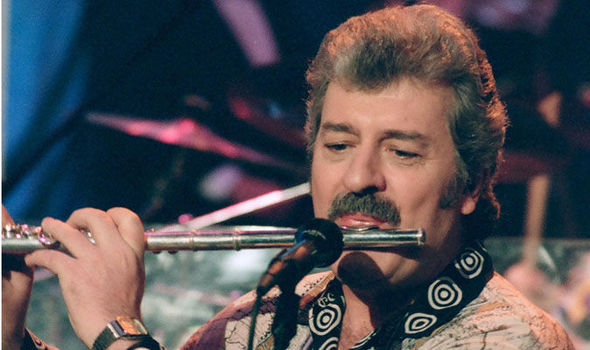
1.Ray Thomas
For 50-ish years now, youngsters have adored scoring to spacey prog-shake on earphones while sitting on beanbag seats, gazing at astro lights, and pondering space, time, and the idea of life itself, man. They couldn't have done it without seemingly the proggiest of all prog groups, the Moody Blues, and that band wouldn't have existed without Ray Thomas. He established the principal incarnation of the band in 1964 and was one of its first artists. As the band developed and embraced its great lineup that included artist Justin Hayward, Thomas changed parts marginally to end up one of only a handful few and positively a standout amongst other woodwind players in shake 'n' move history.
Thomas' work is all finished notorious Moody Blues stuff like Days of Future Passed and "Evenings in White Satin," regardless he sang once in a while, especially on melodies he composed, for example, "Nightfall Time" and "Legend of the Mind." Thomas resigned from the band in 2002, and declared he had prostate growth in 2013. On January 4, he passed on at his home in Surrey at age 76, only three months previously his band was accepted into the Rock and Roll Hall of Fame.
2.Fast Eddie Clarke
Clarke earned his moniker — he was a lightning-brisk guitarist who cooperated with Motörhead vocalist Ian "Lemmy" Kilmister to make propulsive, baffling, disorganized, sedated out, foul, messy, common laborers shake 'n' roll — in other words, metal. Clarke joined the incredible British band in 1976 and played on numerous collections with the gathering, which ended up being simply the band's most generally welcomed, including the self-titled Motörhead, alongside Overkill, Bomber, and Ace of Spades. Quick Eddie was the last surviving individual from that great Motörhead lineup, with drummer Phil Taylor having kicked the bucket in 2015, and Lemmy taking action accordingly not long after.
In 1982, Clarke left Motörhead and shaped the hard musical gang Fastway, most likely best known for the 1983 shake radio hit "Say What You Will." But while you can remove the kid from Motörhead, you can't remove the Motörhead from the kid. "The greatest years of my life were in Motörhead," Clarke revealed to Antihero Magazine in 2016. He passed on January 10 out of a London doctor's facility at age 67 while being dealt with for pneumonia.
3.Dolores O'Riordan
In the midst of all the anxiety and macho-posing regularly exhibit in mid 1990s grunge and elective shake, the Cranberries offered something other than what's expected: then again abundant and despairing fly with a generally Irish-motivated through-line. Quite a bit of that originated from the exceptional and frequenting voice of the band's lead artist, Dolores O'Riordan. Conceived in Limerick, Ireland, she joined the gathering some time ago known as the Cranberry Saw Us when she addressed an advertisement searching for a female vocalist. She got the gig, obviously, due to her wonderful, clear, and adaptable voice, moving tunes like "Wait," "Zombie," and "When You're Gone" to global hit status. (That is to state nothing of "Dreams," which has been utilized as a part of roughly every motion picture trailer created since the tune was a hit in 1994.) She needed to cross out a few Cranberries visit dates and take a large portion of 2017 off due to back issues, however when O'Riordan was discovered expired in her London lodging room on January 15, 2018, it was still a significant stun, as she was a minor 46 years of age.
4.Lari White
In 1988, 23-year-old vocalist musician Lari White moved to Nashville to end up a star, and she discovered achievement right away, winning the Nashville Network's proto-American Idol ability challenge You Can Be a Star. Not exactly a star entertainer yet, White looked for some kind of employment as a lyricist for a noteworthy Nashville distributer, penning tunes for real acts like Shelby Lynne and Tammy Wynette. It wasn't until the point that 1993 that White got an opportunity to take the spotlight, and she did great, piling on about six down home music hits including Top 10 crushes like "That is My Baby," "Now I Know," and "That is How You Know (When You're in Love)." After her performing vocation began to blur somewhat, White returned in the background, creating tunes for Toby Keith and others while additionally getting into acting. Keep in mind toward the finish of Cast Away, when Tom Hanks at long last conveys that unopened FedEx bundle embellished with holy messenger wings to Texas and meets its beneficiary, a truck-driving red-headed woman named Bettina Peterson? That is Lari White. She passed away January 23 from an uncommon type of tumor at 52 years old.

5.Hugh Masekela
Trumpet and flugelhorn player Hugh Masekela is viewed as the "Father of South African jazz," deftly consolidating the coolness and freshness of American jazz with the profundity and kind of various melodic styles of his nation of origin and landmass. He's likewise one of the principal stars of "world music," an absurdly expansive and egotistical term regularly utilized by Europeans and North Americans to depict all music that didn't start in Europe or North America. Yet at the same time, Masekela's effect can't be downplayed. In 1959, his gathering the Jazz Epistles recorded Jazz Epistle Verse 1, the main collection ever by a South African jazz band. A year later, his candid position on South Africa's bigot politically-sanctioned racial segregation framework got him ousted from the nation, so he lived the vast majority of his life in Botswana and the United States, where he unrealistically burned through three weeks at No. 1 on the pop diagram in 1967 with "Eating in the Grass," a laidback jazz instrumental. That checked one of the not very many circumstances in popular music history that a non-European or non-American act was at the highest point of the pops. Masekela likewise played with Graceland-time, "world music"- grasping Paul Simon in the late '80s. The jazz legend and political figure was 78 when he passed on January 23, 2018.
6.Mark E. Smith
Mainstream music tore completely open in the 1970s, with an excitingly extensive assortment of styles seeking open consideration, from punk to New Wave to move music to reggae to the stark and freestyle classification called "post punk." Which one of these future the sound of the 1980s? According to the music deserted by Mark E. Smith, every one of them, on the off chance that he'd had his direction. The Manchester-conceived Smith framed his band The Fall in 1978, and for a long time it was his vehicle to attempt whatever melodic flight of extravagant caught his consideration. While his verses frequently bragged mind, pleasantry, and complex ideas, the music differed significantly, consolidating components of punk, move, carport shake, reggae, and the sky is the limit from there. The Fall discharged 32 collections, and keeping in mind that they never had a hit single, as such, they were colossally persuasive, laying the preparation for the attentive move music of the '80s and past, and the time characterizing elective shake of the '90s. Smith was 60 years of age, and he passed away discreetly (for once) at home on January 24, 2018.
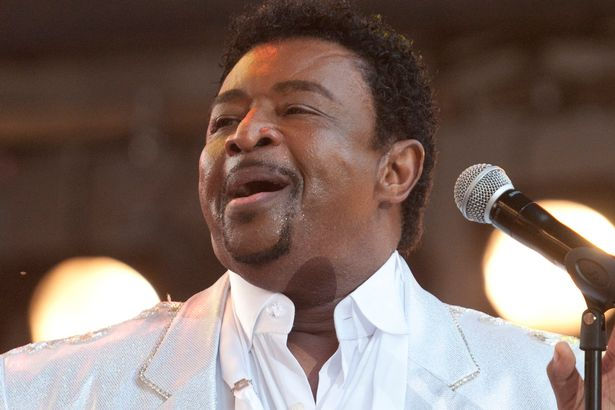
7.Dennis Edwards
It can't be simple joining a band after it has just had real achievement and after its cherished stars have cleared out. It's quite often a hopeless scenario to fill those enormous shoes while likewise driving the gathering into new and effective region. Be that as it may, this story isn't generally of the "Gary Cherone of Van Halen" assortment, on the grounds that there are additionally artists like Dennis Edwards. After the Temptations enchanted a large number of fans all through the 1960s with consummate pop melodies like "My Girl" and "Ain't Too Proud to Beg," lead vocalist David Ruffin left the gathering in 1968, and Edwards had the apparently unpleasant activity of supplanting him. (The Temptations didn't look very discover their person — Edwards was an individual from The Contours, a Temptations-esque gathering that had opened for the Temptations on visit.) However, this was correct when the band was heading into its unusual, hallucinogenic funk stage, and Edwards was the correct person to hold the crowd's hand on creative, future-thinking tunes like "Daddy Was a Rollin' Stone." Edwards was a piece of the Temptations now and again until 1989 — the year the demonstration entered the Rock and Roll Hall of Fame — and had a performance hit in 1984 with "Don't Look Any Further." According to Edwards' better half, the improbable pop symbol passed far from complexities of meningitis on February 1, 2018, just two days short of his 75th birthday celebration.
Content credit: djpunjab
Comments